
Dispatch: A Spoiler-Free Review
The epic return of a beloved genre.

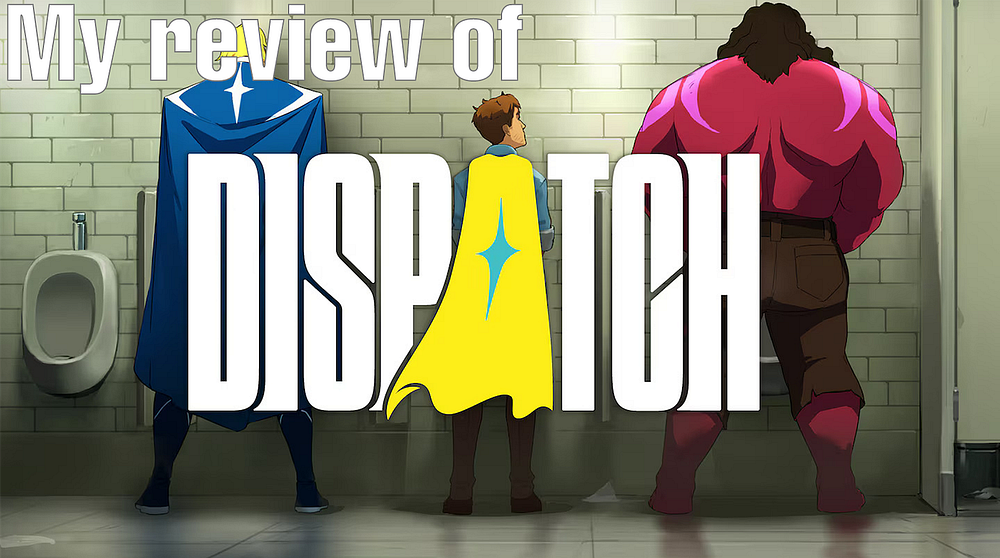
The gaming community tends to sleep on interactive visual novels. Given the nature of the medium, it’s normal to want to play a video game more than watch it. Never is the Skip command smashed harder than during a long cutscene that you want to finish and get back to playing the game.
However, if you put together an intriguing story, well-written dialogue, a charming cast of characters, voice actors who know what they’re doing, people will excuse the lack of gameplay, choosing to enjoy the narrative journey.
And a specific style of fan-favorite interactive visual novels has made a comeback in 2025 with AdHoc Studio’s “Dispatch,” and to no one’s surprise, it’s caused quite a splash in the industry. So, how does Dispatch fare up to the narrative-driven interactive visual novels of the past, and will it find enough success to revive this subgenre?
A Little Background
In the 2010s, the interactive visual novel market was dominated by Telltale Games. They were well known for their story-driven, minimal gameplay titles, where playing the game meant making important decisions that would impact the story in a number of ways.
Telltale Games has a large portfolio of titles and collaborated with some big franchises too, including Batman, Guardians of the Galaxy, Borderlands, Jurassic Park, and Minecraft. The studio is most famous for its The Walking Dead series and, my personal favorite, The Wolf Among Us.
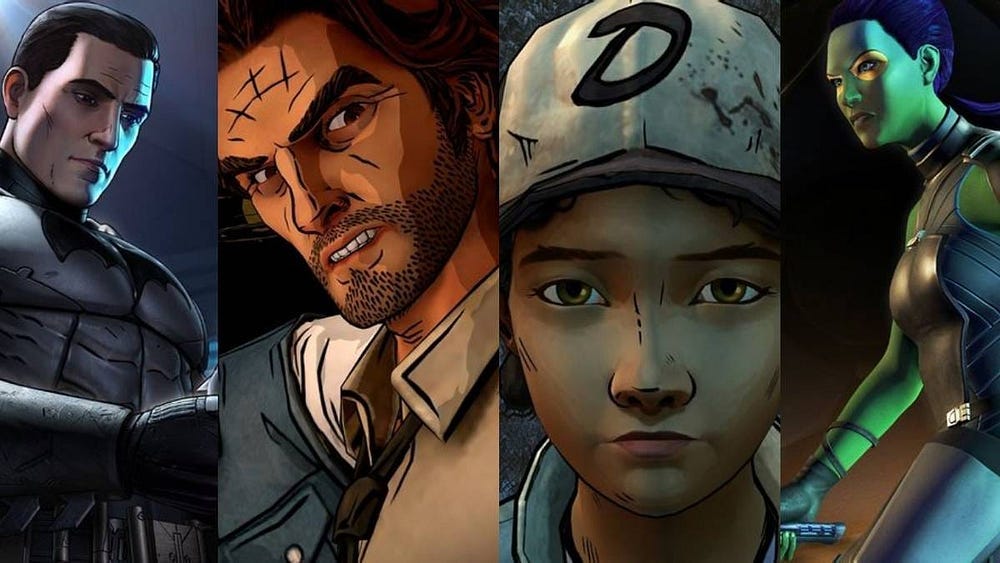
These games have the player taking control of the protagonist and going on some sort of journey, along with a cast of colorful supporting characters. You won’t race cars, gun down terrorists, or perform magical spells, but you are immersed in an intriguing narrative, where the things you say and the choices you make could drastically impact the story and your relationships with the other characters.
What set Telltale games apart from the likes of Heavy Rain or Detroit: Become Human was the episodic format of the games, which made them a lot more digestible. The TellTale games weren’t always perfect, but as far as interactive visual novels went, they were successful in filling that niche of the industry.
So, when I heard that Dispatch was developed by AdHoc Studio, a breakaway team of veterans from Telltale Games, I pretty much knew what to expect. Dispatch follows the tried and true formula of a narrative-rich experience, where the story, characters, and players’ decisions are the center of the experience.
Though the gameplay is minimal, the well-written story and charming cast of characters really take me back to some of my favorite story-focused titles. Add to this classic formula the creative genius of the Critical Role team, and Dispatch became one of the most hyped up games of 2025.
The Story of Robert Robertson the Third
You are Robert Robertson the Third (yes, that’s actually his name), masterfully voiced by Aaron Paul, the famous superhero, Mechaman, who is a blend of Batman and Iron Man. He doesn’t have any superpowers; just a big robot suit passed down through generations of Robert Robertsons, all of whom took on the mantle of Mechaman. He is the third Mechaman, after the subsequent deaths of his grandfather, Robert Robertson the First, and his father, Robert Robertson the Second.
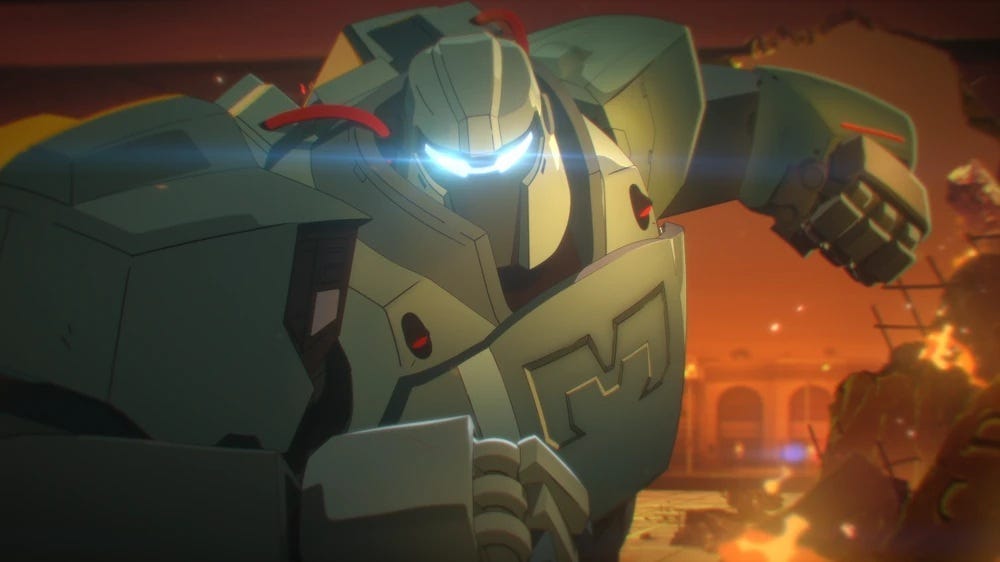
Mechaman, however, is not as fortunate as Iron Man or Batman. Spending his entire family’s inheritance on keeping the Mechaman suit in working condition throughout his years of crimefighting has left him penniless. But this doesn’t dissuade him from going after his father’s killer, the supervillain Shroud, who was once a member of his father’s superhero team.
After finding Shroud, Mechaman is incapacitated after an explosion irrevocably damages the suit, leaving Robert without any means of fighting crime. And with that, the Mechaman superhero lineage is over.
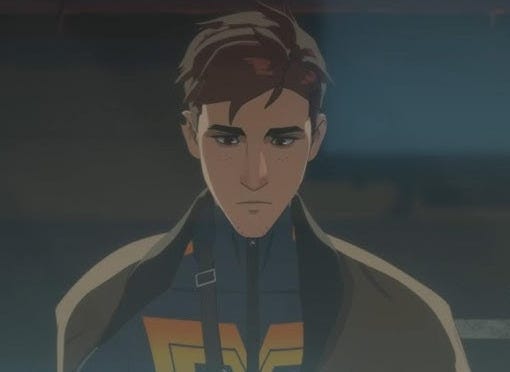
This is when Robert meets Blond Blazer, a famous superhero who works for the Superhero Dispatch Network (SDN), a corporation that offers superhero assistance to citizens who sign up for their services. Since Robert’s mech is no longer in fighting condition, Blond Blazer offers him a job as a dispatcher, the person in charge of accepting calls from citizens and dispatching superheroes to help them with their needs. She also offers him the company resources to help rebuild the mechsuit.
When I first saw the trailer, I was a little worried about Robert. I’ve grown tired of apathetic bad-boy protagonists who treat their depression like a really expensive cologne.
Fortunately, I was proven completely wrong once I played the game. Robert’s not your typical cold-hearted, macho, lone wolf, “too-cool-to-care” protagonist. Sure, Robert is very clearly going through a lot of inner torment and personal trauma, but he very clearly loves being a superhero. He can be snarky at times, but he’s a very competent superhero. Even as a dispatcher, he is professional to a tee and determined to help his city, even if it means sitting behind a desk and accepting calls.
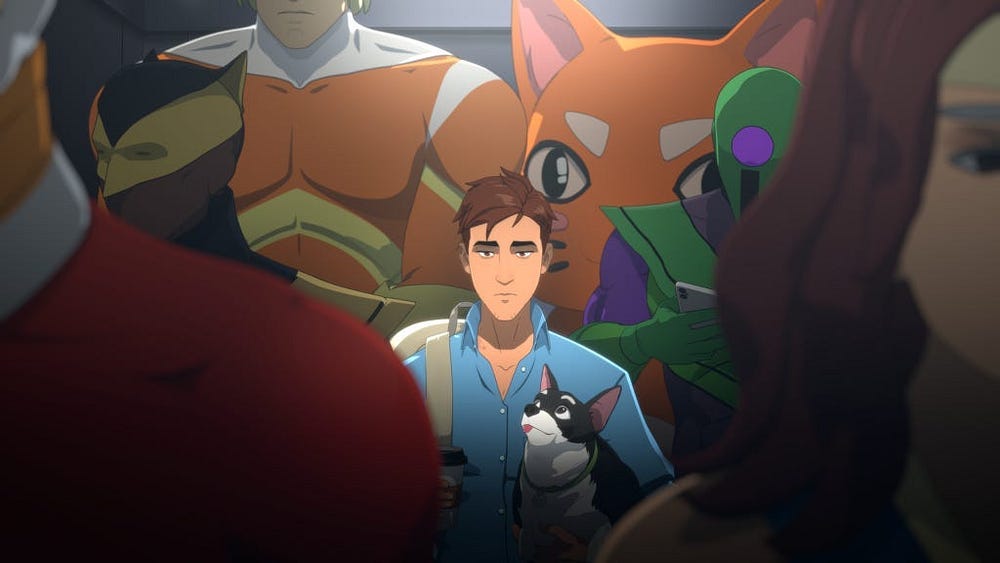
It would’ve been very easy for the writers to make Robert brush off the job opportunity and have Blond Blazer beg him to join. But he immediately cooperates, because he’s pragmatic; he knows this company can help him fix his suit, and he’ll get back to fighting crime. A more stereotypical depressed, cynical protagonist would’ve gone to live in some shack in the woods. But Robert gets back to business.
This is such a refreshing take on a protagonist down on his luck. He’s clearly depressed, but he’s doing something about it. He doesn’t use his difficult situation as an excuse to be rude or not care about the well-being of others. His determination is actually somewhat inspiring. And on top of that, he also proves to be a great mentor for Z-Team, the cast of unique and individually charming supporting characters who really take the story to another level.
Meet the Z-Team
There’s been a lot of cynicism in the superhero genre over the years. DC and Marvel each have their own teams of anti-heroes who aren’t supposed to be taken seriously and learn to overcome their reputations by working together and “becoming a family”.
The Z-Team in Dispatch is very similar to your Suicide Squad and Thunderbolts; a team of villains who, instead of serving jail time, are working for SDN as superheroes for hire. Much like in DC and Marvel comics, the Z-Team is the small-time, less impressive villains who were never really taken seriously, even by Robert himself. However, unlike the aforementioned counterparts, the Z-Team is actually pathetic. When Robert first starts dispatching them, they just can’t do anything right, even when tasked with simple things, like rescuing a cat from a tree or dealing with a toilet that’s spewing feces all over the room.
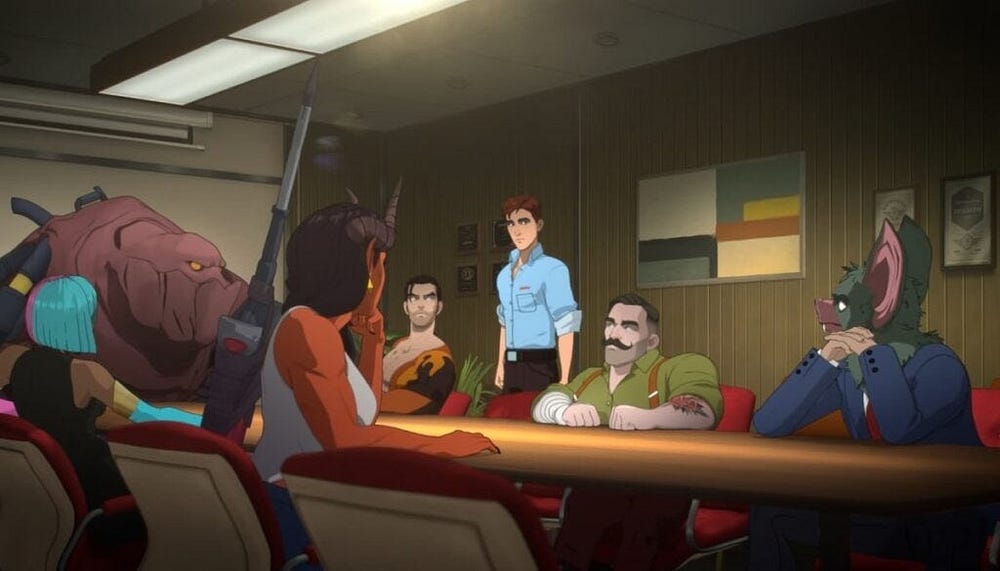
They can’t stop making pointless small talk, arguing about the most menial subjects, and regularly poke fun at Robert, all the while he’s just trying to stay professional and do his best at the job.
As the player, it is your job to maintain some semblance of team cohesion among your crew, work through personal dramas, and do whatever you can to turn this team of small-time villains into actual superheroes.
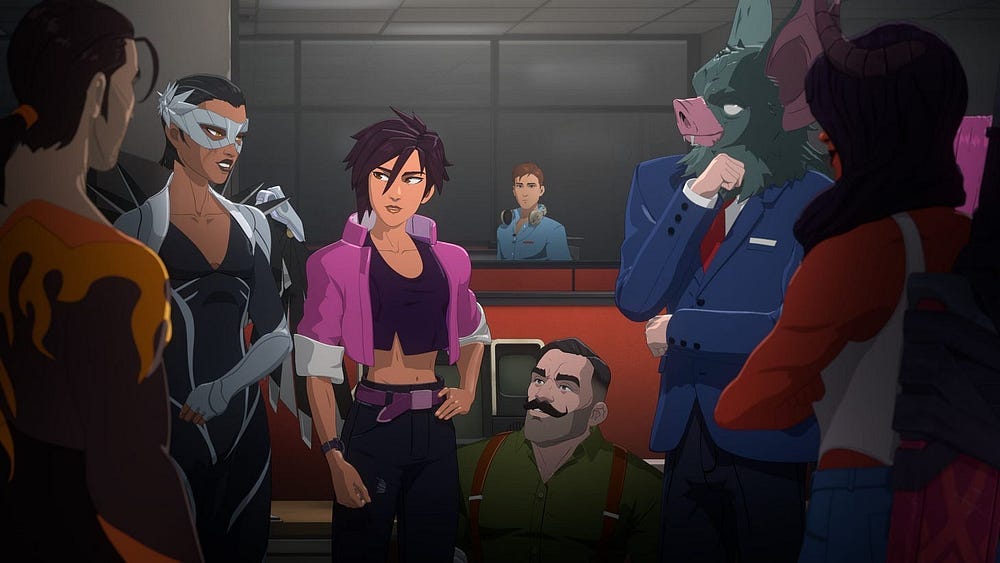
Each member of the Z-Team is incredibly charming in their own way. Initially, you love to hate them, but then you grow to love them. This is made possible thanks to the hilariously witty writing and the impeccable voice acting. You really grow to love each of them in their own unique way, regardless of how much they make fun of you.
And Speaking of Love…
No game with a branching narrative is complete without a romance subplot, of course. One of the main subplots in the story of Dispatch is the romance. Unlike, say, Mass Effect, you can’t romance every supporting character. But the subplot that is there is written quite well and doesn’t feel too forced.
I say “too forced”, because at first glance, I was a little afraid that the writers leaned too far into the romance and were expecting the subplot to become a typical cringy male fantasy of you just being some random guy that seemingly everyone wants to get in your pants. But the romance is handled with nuance. It’s really not cringy at all, though it does feel a little forced sometimes.
Despite that, the dialogue and character development still work quite well to the point that sometimes it feels like you’re watching a romantic comedy more than playing a game. Is the romance as layered as Pride and Prejudice? Obviously not. But is it good at keeping you emotionally invested in the supporting characters?
On top of that, you can skip the subplot entirely if romancing fictional characters in a video game is not your thing. So if you cringe at the thought of some cheesy romantic dialogue in video games like me, then you don’t have much to worry about with Dispatch.
Surprisingly Fun Gameplay
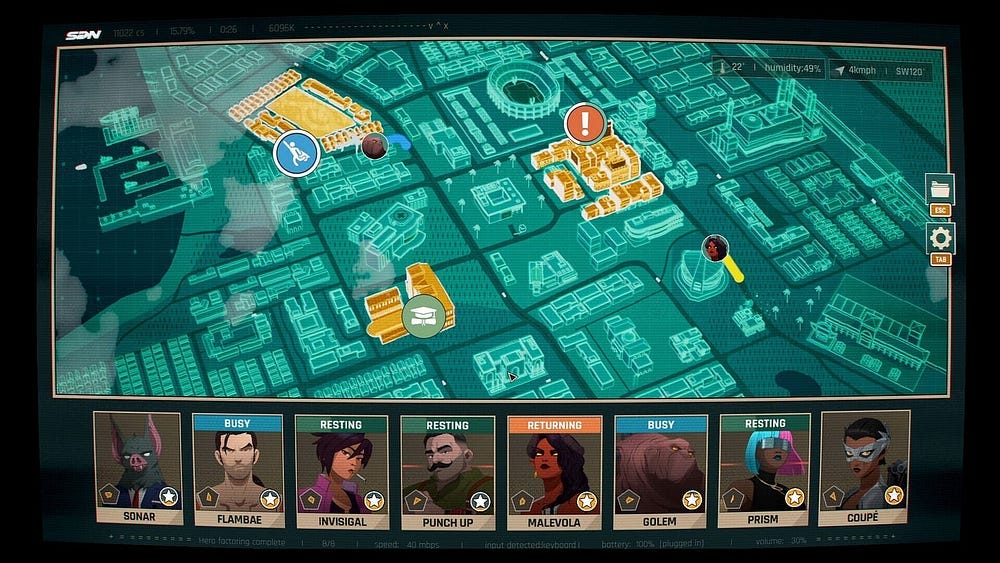
Keeping up with the tradition of Telltale Games, AdHoc Studio could’ve disregarded the gameplay entirely. But to my surprise, the gameplay sections of Dispatch, where you have to send members of Z-Team on various assignments, are actually fun in their own right.
Dispatch does require you to strategize when managing your team, timing their dispatches, and choosing the right hero to send out. There are also light RPG elements where you get to level up your heroes’ powers, find different synergies among the members, and decide what roles each of them will fill on the team.
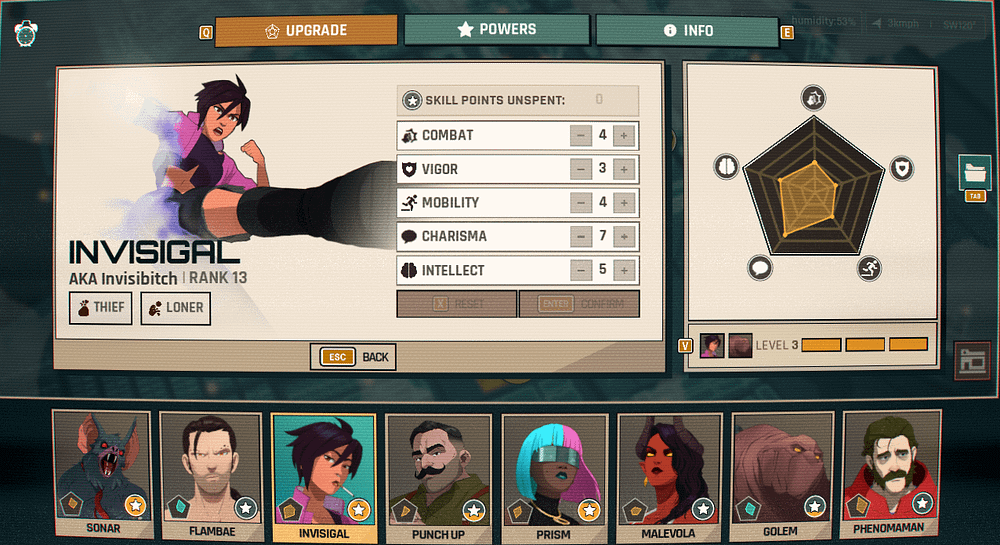
I wouldn’t exactly call Dispatch a strategy game, but the gameplay sections are genuinely fun to the point that I’ll sometimes replay the dispatching sections of the game, skipping the cutscenes and story. And on top of that, how successful you are in the gameplay section will have an impact on how your character will be perceived by the rest of the team. Though not nearly as much as the narrative choices you make, the gameplay sections can impact your story.
So, if most of your dispatches were unsuccessful throughout the first playthrough, give it another shot, as the story may change if you’re more successful.
The Illusion of Choice
This is where I get into the somewhat negative aspects of Dispatch and the Telltale style of games as a whole. I’ve always had a bit of a problem with the way the stories in these games branch out, or, more to the point, don’t really branch out.
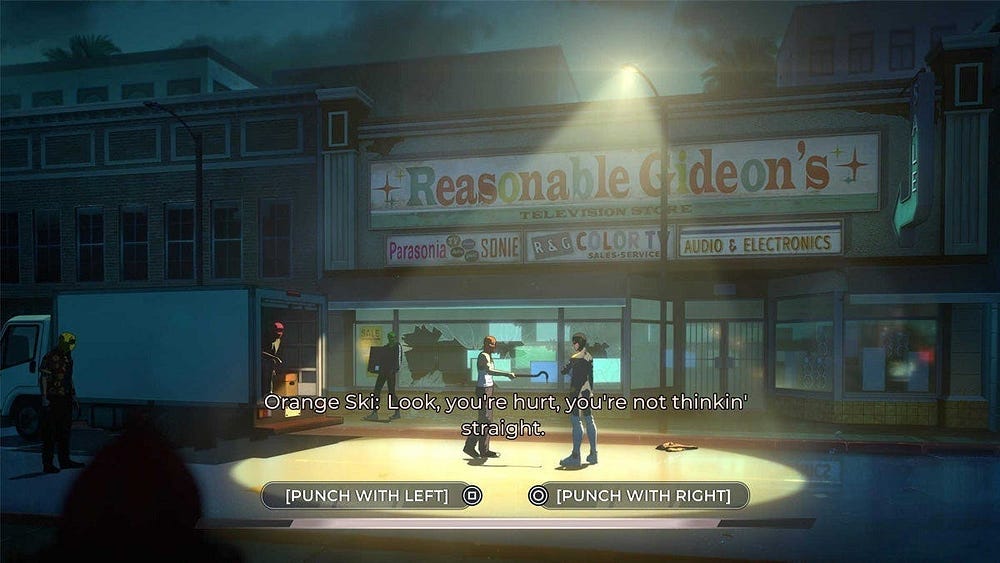
Sure, there are a lot of choices to be made and yes, characters will react differently to some of the things you do and say.
However, in the large scheme of things, regardless of what you say and do, the story will play out, more or less, the same. You’ll make certain choices and cutscenes will play out a little differently, like in one case you may be sitting next to character A and in another case you may be standing next to character B. Or character C might end up hating you in one playthrough, but loving you in a different one.
But the choices you make aren’t going to impact the narrative as a whole. This might come off as a bit of a spoiler, but there’s really nothing you can do that will make the bad guy win in the end, or cause your character to die. You’re not going to make sweeping changes to the story with your decisions.
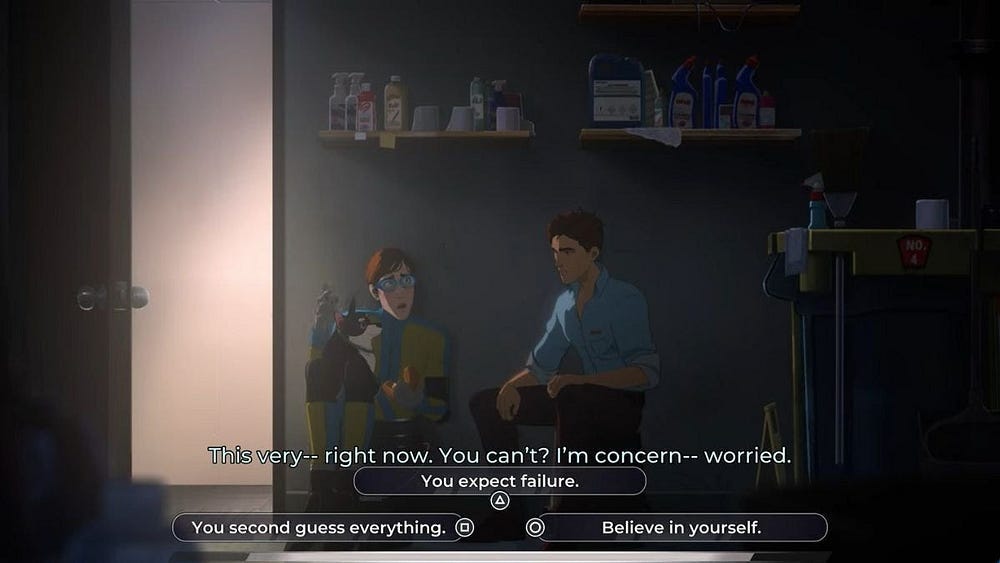
For example, early on in the game, you’re faced with a very important choice that will alter your superhero team in one of two ways. You’d think that this decision would greatly impact how the rest of the story plays out, but it actually doesn’t, outside of a few interactions and unique bits of dialogue. So, this decision just felt like it was forced on the player to trick them into thinking that their choices will leave a lasting impact on the story, but they really don’t.
Now, keep in mind that’s always been the case with Telltale Games, and that’s the case with Dispatch. On the one hand, it is a little disappointing, but on the other hand, that’s just how these games are, and it’s not necessarily a bad thing. The Ace Attorney series is even more straightforward, but that doesn’t stop it from being a genuinely fun experience.
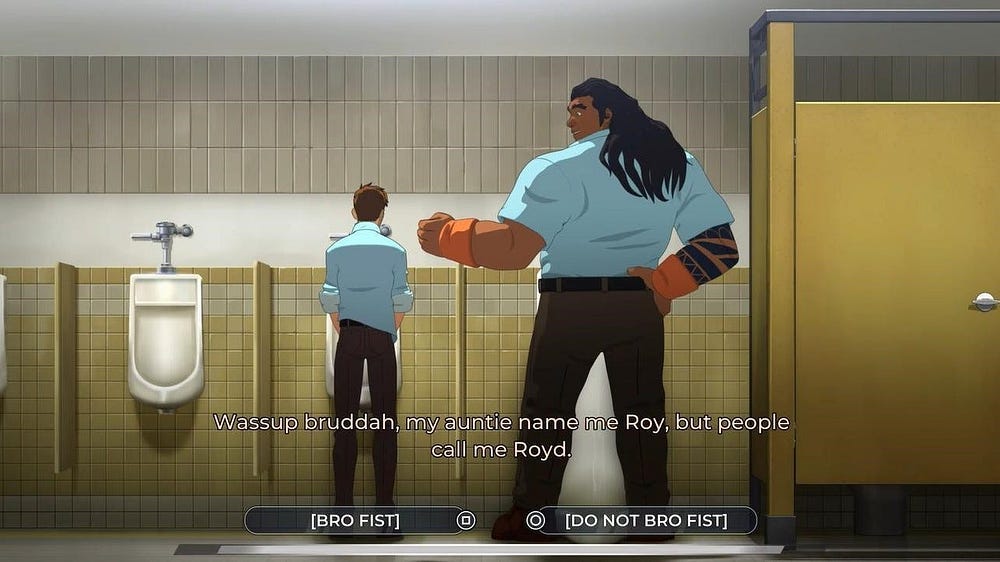
Whether you like it or not, this is how these kinds of games have been for over a decade, and people really love this formula. If anything, perhaps these sort of games teach you to enjoy the journey, even if they all lead you to the same ending.
An Ending Slightly Fumbled
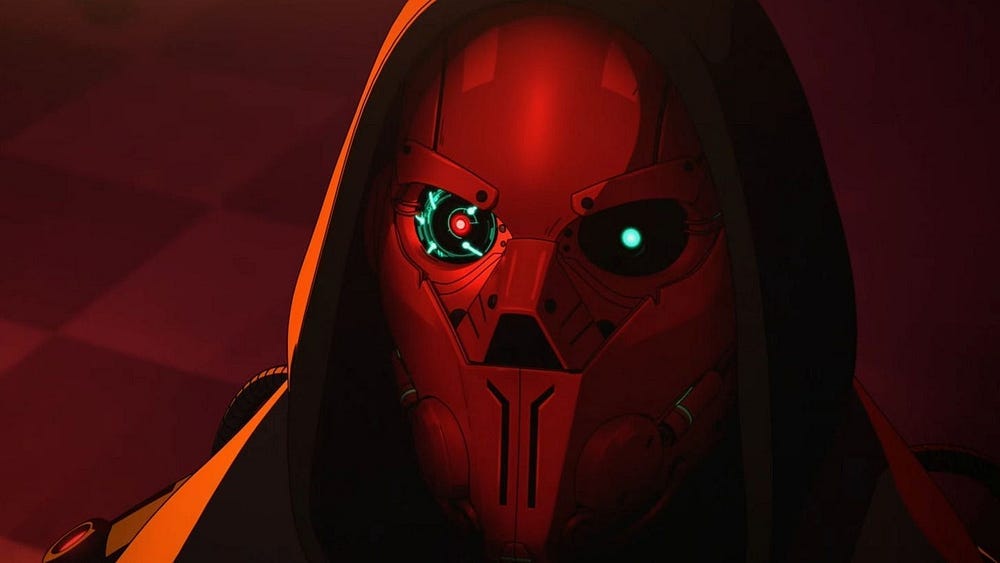
I promised I won’t get into spoilers, and I won’t. But to sum up my opinion on the story, I’d say that the plot and characters were all written quite well up until the last couple of episodes.
This isn’t to say that I think Episodes 7 and 8 of Dispatch are bad, but I do think a few subplots were fumbled and did not have as much of a satisfying payoff as I’d hoped. I’ll keep it as vague as possible for the sake of avoiding spoilers by saying that, as a writer, some of the biggest mistakes I’ve made were ruining previously emotional moments by not taking the risks to demonstrate the true stakes and dangers of a conflict. This is a mistake Dispatch makes as well.
I can’t stand getting emotional over a bad situation, thinking the stakes are high, only to find out things aren’t actually too bad because of some very simple solution that wasn’t foreshadowed or set up has solved all our problems. It’s unsatisfying and takes me out of the experience, because I no longer fear for any of the characters.
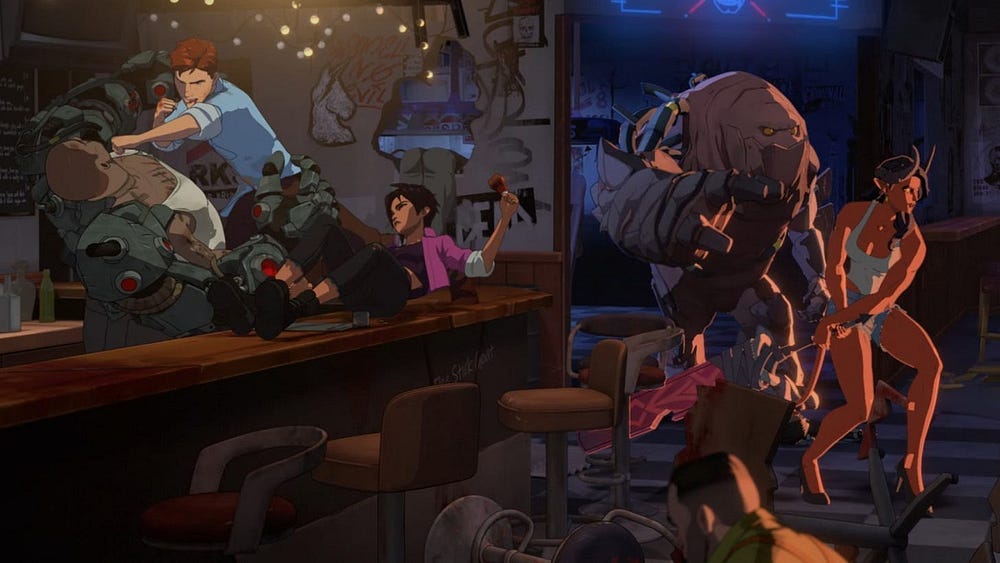
Additionally, the villain also ends up being underwhelming. There were a metric ton of theories flying around the Dispatch fan community, and I honestly thought many of them were far more intriguing than what actually happened. The villain turns out to be somewhat inept and really unimpressive compared to how well he was set up.
This didn’t necessarily tarnish the experience as a whole for me. The story is still satisfying to get through, but if you’re expecting the ending to blow your mind with a crazy twist, then you’re going to be a little disappointed.
Hope for Season 2
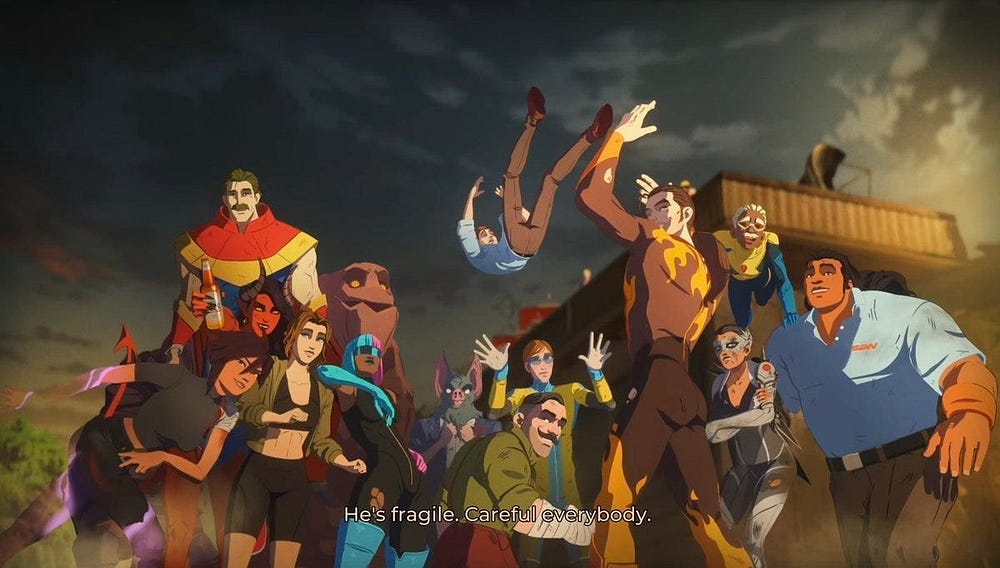
I enjoyed Dispatch with all my heart. Despite my problems with the limited impact of your choices, weak stakes, the somewhat dud villain, and the slightly underwhelming final episode, I still had an amazing time with Dispatch.
Dispatch is charming through and through. Every character is lovable, the animation is quite good (outside of a few nitpicked visual continuity errors), the story and world really suck you in, the voice acting is superb, and the gameplay sections, though limited, are really fun.
I’d definitely recommend playing Dispatch and genuinely hope a second season is on its way.